How to Plan a Surprise Proposal in Muskoka Without Giving It Away
A practical step-by-step guide to choosing the location, creating a believable plan and making the moment feel completely natural.
You’ve decided to propose. Now it’s time to organize a meaningful location, a believable reason for being there, good timing, a backup plan and possibly a hidden photographer - all without suddenly acting like someone who definitely has a secret.
No pressure.
The best surprise proposals aren’t necessarily the most elaborate. They’re the ones that feel right for the couple and have enough planning behind them that, when the moment arrives, nobody’s worrying about directions, crowds or where they’re supposed to stand.
Here’s how to map out the entire proposal without turning it into a military operation.
The short version
To plan a surprise proposal:
Decide how you want the moment to feel.
Choose a location that suits your partner.
Decide whether you want proposal photos.
Confirm the exact spot and approach.
Create a believable cover story.
Choose the best time of day.
Keep communication simple.
Plan what happens immediately afterwards.
Let’s break it down.
Decide how you want the proposal to feel
Before searching for locations, think about the experience your partner would actually enjoy.
Would they love a quiet moment beside the water? A scenic lookout after a short hike? A private cottage dock? A relaxed walk through a familiar place? Or something more polished at a Muskoka resort?
Try to picture the moment from their perspective. A good proposal should feel personal. If your partner dislikes attention, proposing in the middle of a crowded restaurant probably isn’t the move. If they love hiking and being outdoors, an elaborate indoor setup may feel less natural than a beautiful trail or lakeside spot.
You don’t need a complicated theme. You need the right atmosphere.
A useful question is: “If no one else ever saw this proposal, would this still feel like us?”
If the answer is yes, you’re heading in the right direction.
Choose a location that fits your partner
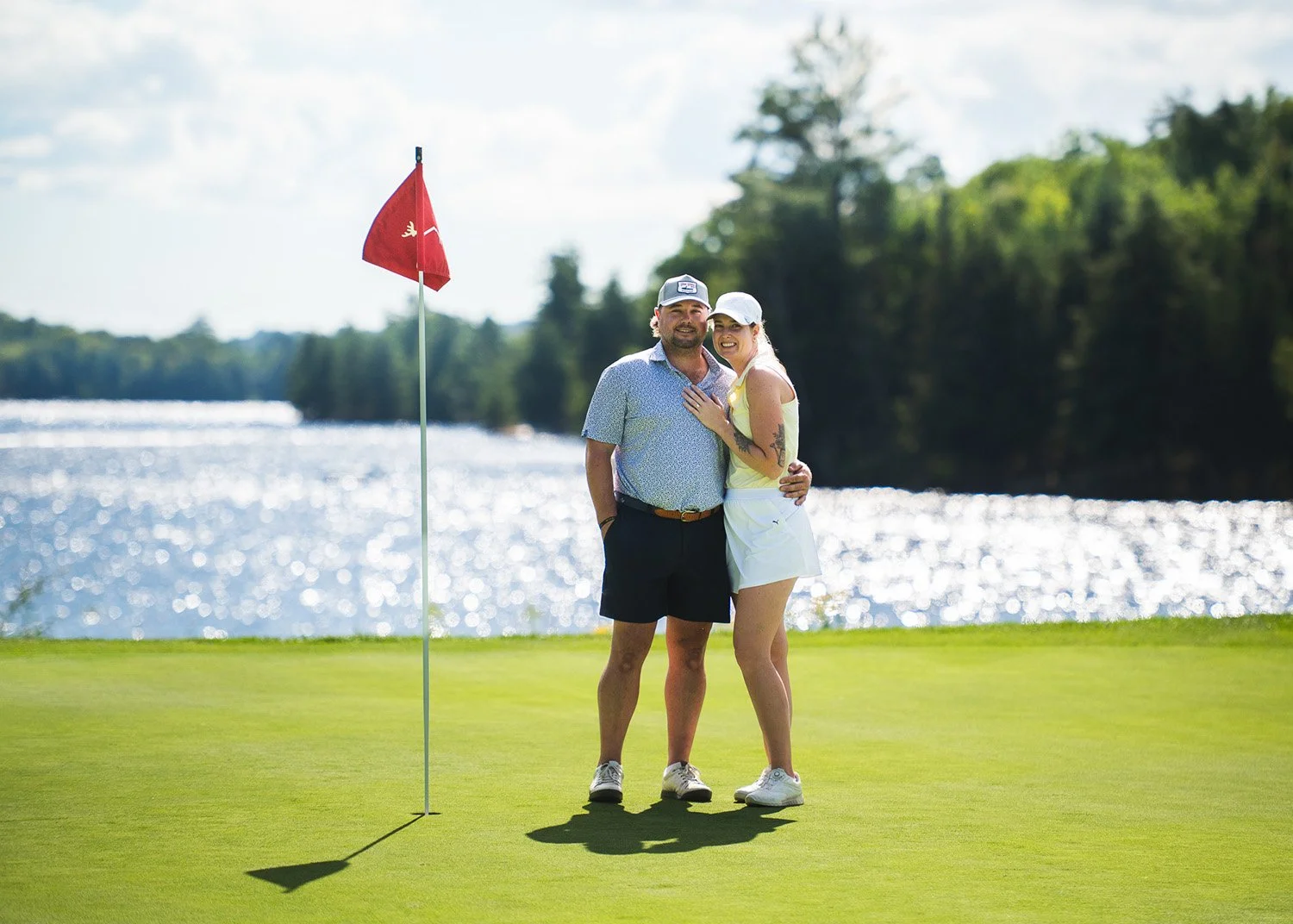
Muskoka and Georgian Bay offer no shortage of beautiful proposal locations: lakes, docks, trails, resorts, cottages, golf courses and waterfront parks. The challenge isn’t finding somewhere scenic. It’s choosing somewhere that makes sense for the two of you.
Look for a location with:
A believable reason to visit
Enough privacy for the moment to feel personal
A clear view and attractive background
Reasonable access for your partner, you and potentially a photographer
A nearby backup option if the weather changes
Something enjoyable to do afterwards
The location doesn’t need to be famous. In fact, a quieter spot with personal meaning will often work better than the most recognizable lookout in the area.
If you’re still deciding on the general area, my guide to where to propose in Muskoka and Georgian Bay covers cottages, resorts, waterfront locations, parks, trails, golf courses and other local options.
Choose the general area first, but don’t lock in the exact proposal spot until you’ve considered timing, light, crowds and how you’ll approach it.

Decide whether you want the moment captured
You don’t have to hire a proposal photographer. Some couples genuinely prefer the moment to remain completely private, and that’s a perfectly good choice.
If you know your partner would value having photos however, it’s worth making that decision early. Photography affects the location, timing, walking route and exact place where you’ll propose.
Your main options are:
Keep the moment completely private with no photos
Set up a phone or camera in advance
Ask a friend or family member to capture it
Hire a professional proposal photographer
A phone can work in a quiet, controlled location, although framing and audio alerts have a habit of becoming surprisingly complicated at the worst possible moment.
A friend may be able to help, but they’ll need somewhere believable to stand - and they may be just as nervous as you are.
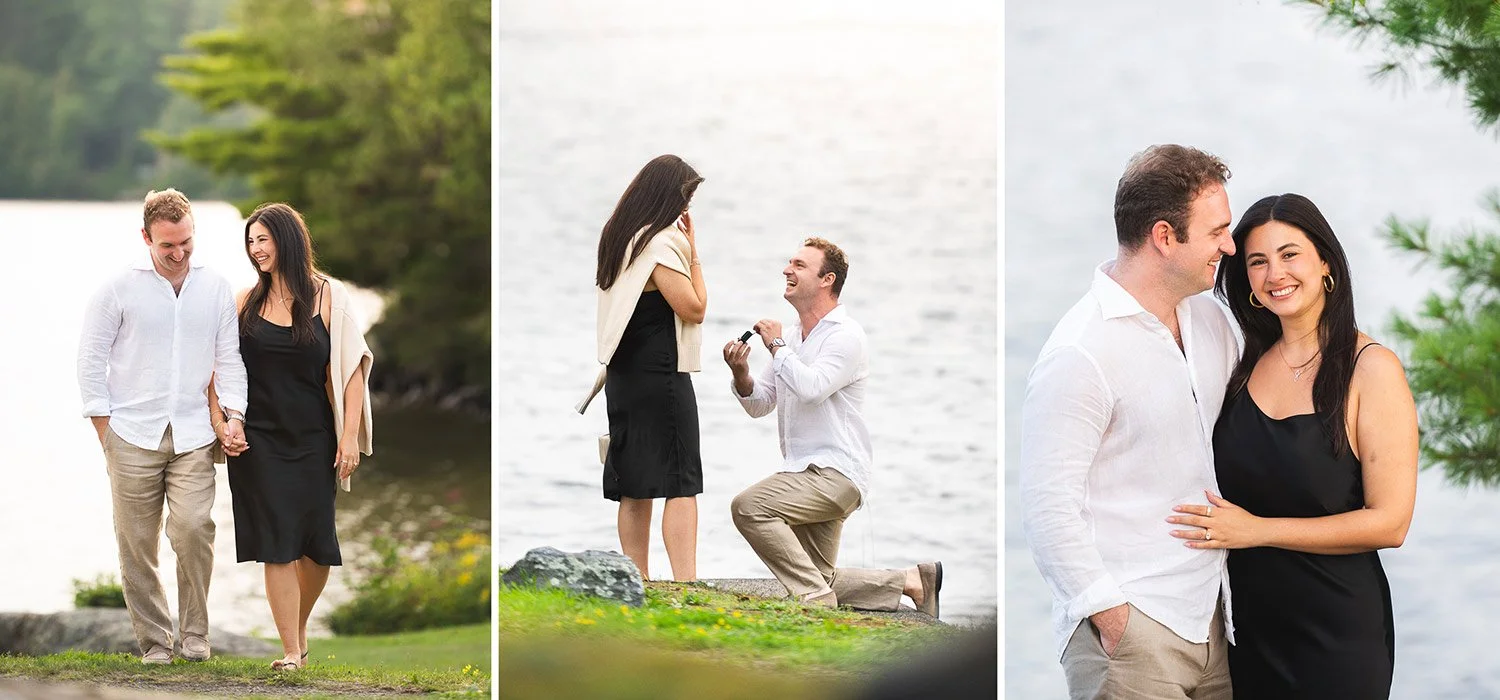
A professional proposal photographer can remain out of sight, shoot with a zoom lens from distance, capture both reactions and document the full sequence without pulling you out of the moment. They can also help with the practical planning: where to stand, which direction to face, when the light will be best and what to do if the original plan stops cooperating.
If you’re considering that option, you can see how my Muskoka proposal photography process works before finalizing your location.
The important thing is to decide early. It’s much easier to plan the photos around the proposal than to make an already finalized plan work for photos afterwards.
Build the plan backwards from the exact spot
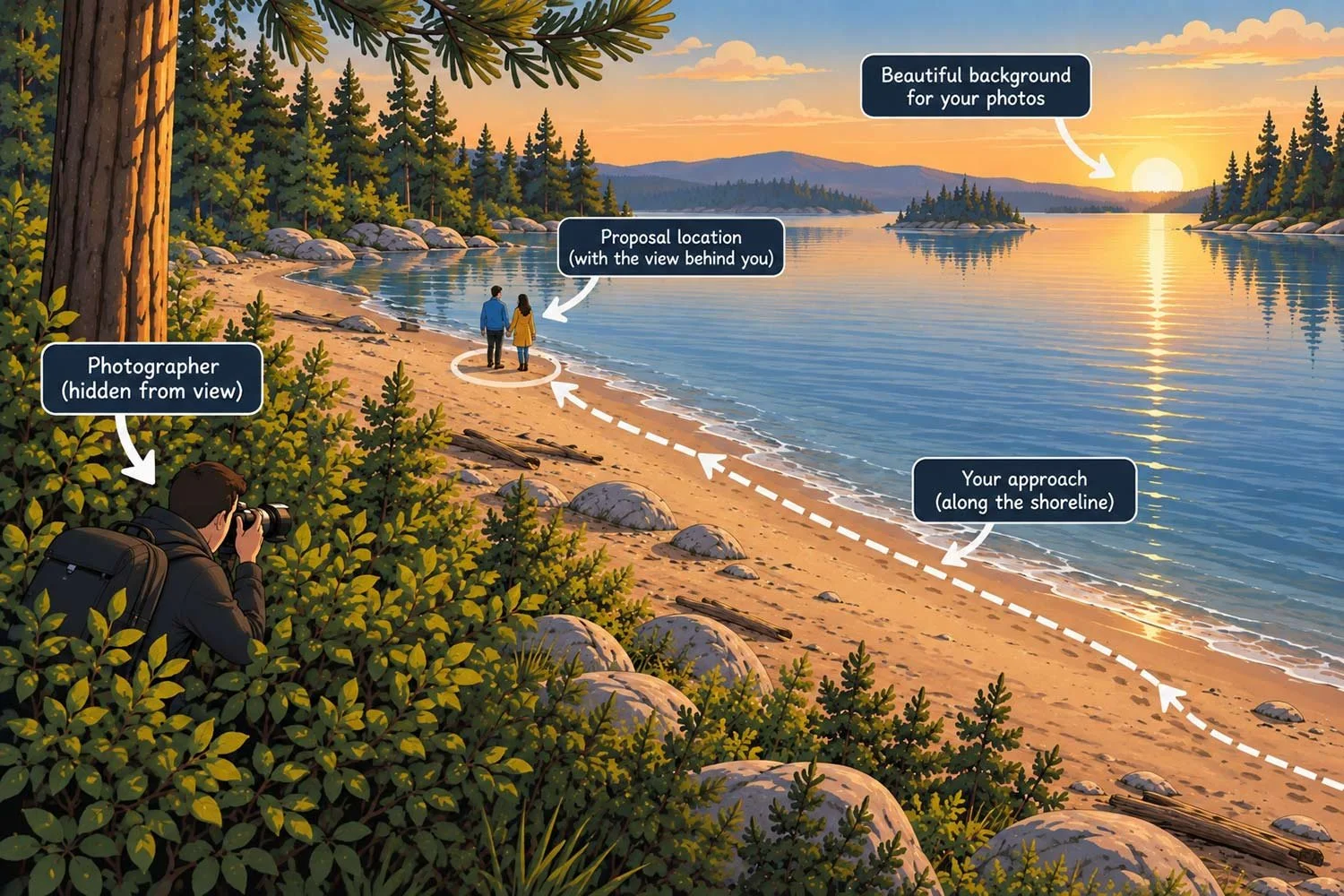
Once you’ve chosen the general location, identify the precise place where you’ll stop and propose. “Somewhere near the lake” isn’t precise enough.
You should know:
The exact map pin
Where you’ll be standing
Which direction you’ll face
How you’ll arrive at that position naturally
Where a photographer could remain unnoticed
What will appear in the background
How long it takes to walk there
Whether your partner will need suitable footwear
Reference photos can be very helpful. A quick phone photo with an arrow showing the intended spot is much clearer than a long explanation involving “the second large tree after the bend.”
If you’re working with a photographer, confirm the spot before the proposal day. A beautiful location may have poor sightlines, distracting backgrounds or nowhere for someone with a camera to wait discreetly.
The goal is precision behind the scenes so the moment itself can feel spontaneous.
Create a cover story that doesn’t feel like a cover story
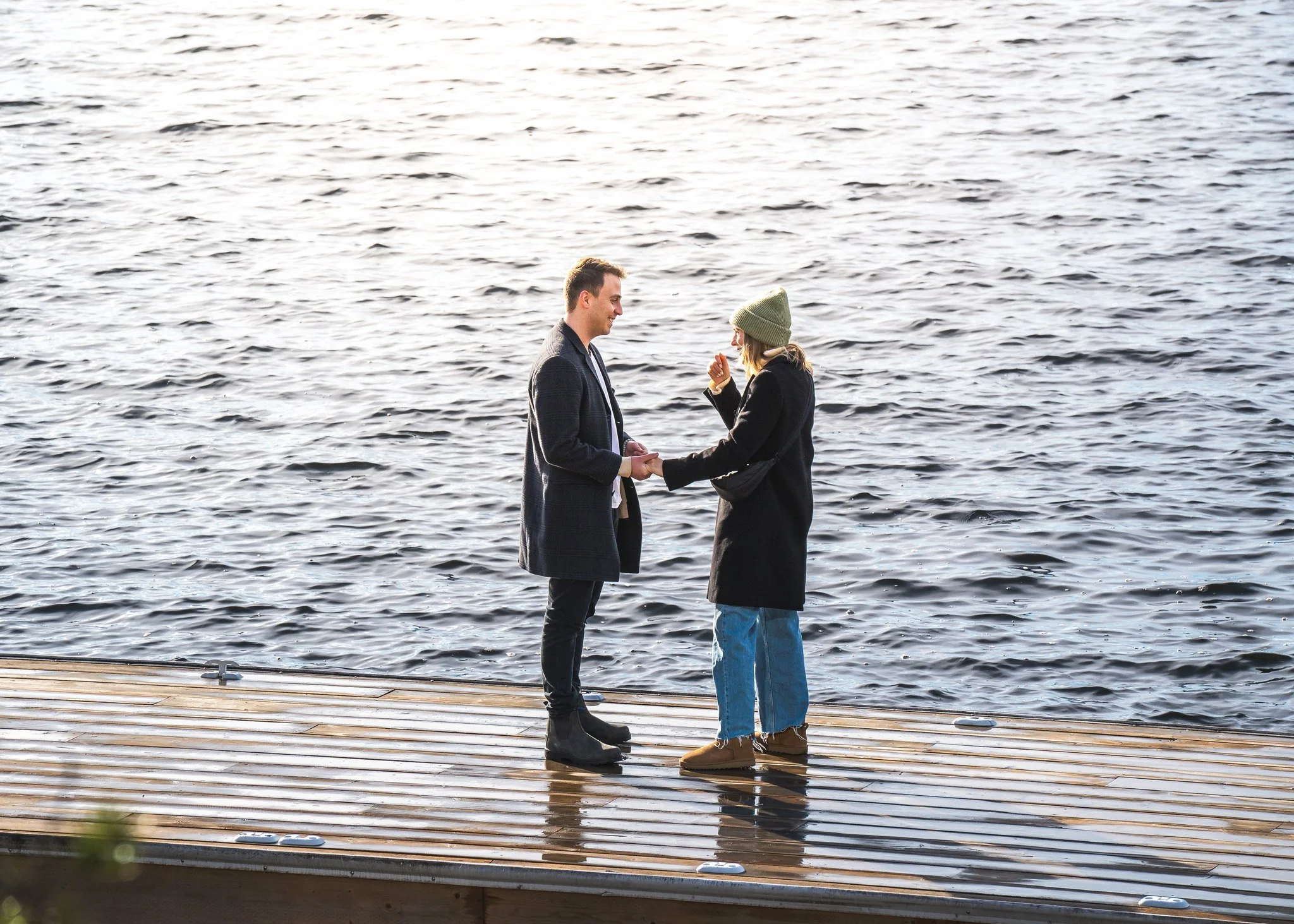
Your partner needs a natural reason to be at the location, at roughly the right time, dressed in a way they’ll feel comfortable being photographed. The best cover stories are simple and close to something you’d normally do together.
You might suggest:
Going for a walk before dinner
Visiting a lookout while spending the weekend in Muskoka
Exploring the grounds of your resort
Taking a short cottage walk before sunset
Stopping somewhere scenic on the way to another activity
Meeting friends or family nearby later
Playing a round of golf or visiting a familiar course
Avoid constructing an elaborate story with ten moving parts. The more details you invent, the more details you’ll need to remember while trying to behave normally.
Also be careful about suddenly introducing unusual behaviour. If you never plan romantic sunset walks and now you’re insisting on one at exactly 7:18 p.m., questions may be asked.
Keep it believable. Keep it flexible. Most importantly, keep it easy for your partner to enjoy.

Choose the best time and lighting
The most flattering outdoor light is generally earlier in the morning or later in the day. Midday sun can create harsh shadows, while the few hours leading into sunset provides softer, more flattering light.
That doesn’t mean every proposal needs to happen at sunset. Timing should also account for:
When the location is busiest
Travel time
Resort or restaurant reservations
Trail conditions
Cottage schedules
Sunset time
How much flexibility your cover story allows
Build in more time than you think you’ll need. Traffic happens. Parking lots fill up. Someone decides they’d like to stop for coffee. A good proposal plan has a preferred time and enough breathing room to survive real life.
Establish simple signals and communication
If a photographer will be there, communication should be almost invisible.
Usually, a simple message when you leave or arrive is enough. You shouldn’t need to make a suspicious phone call from the parking lot or repeatedly check whether the photographer is hiding behind the correct shrub.
Here’s how I typically communicate with my clients:
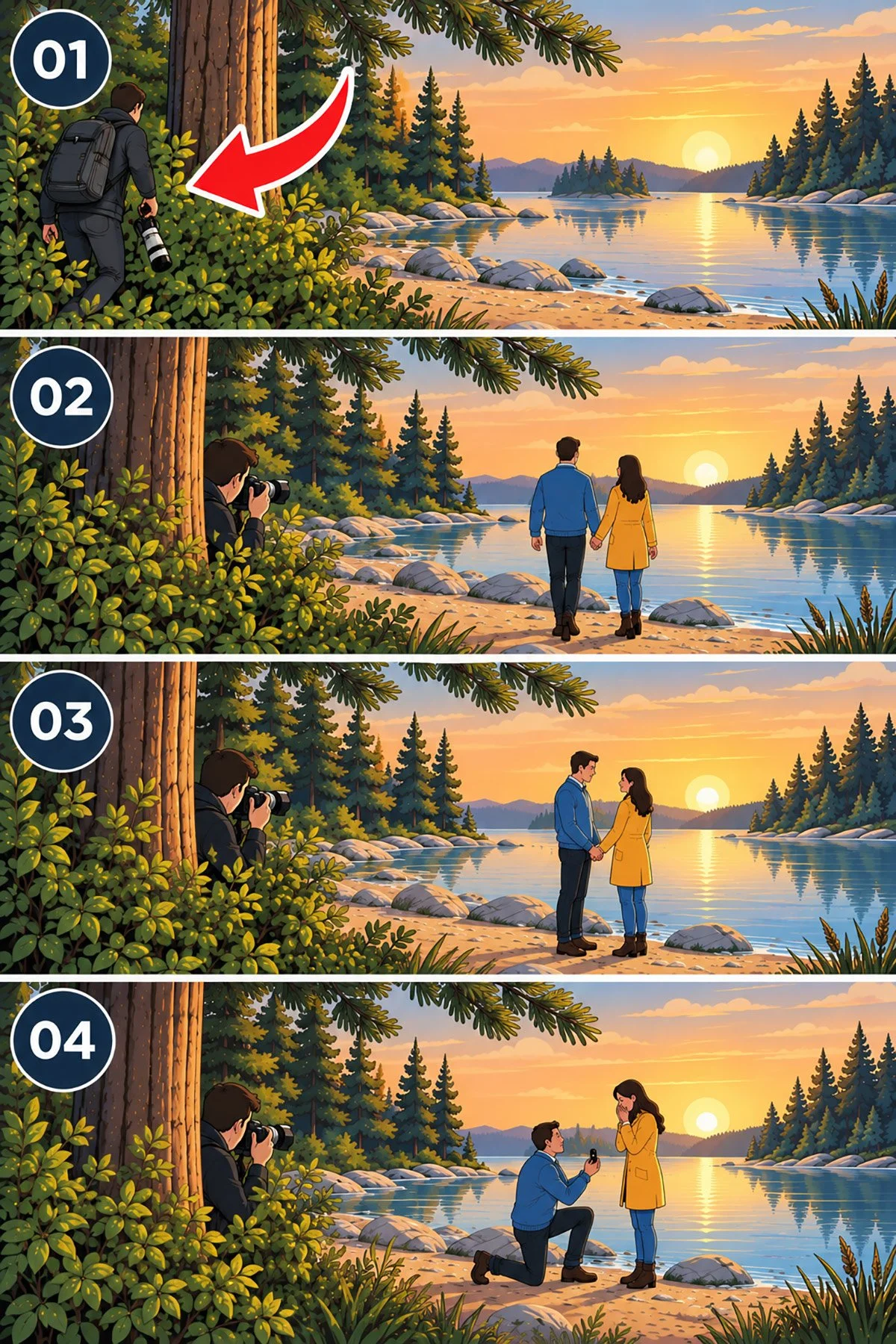
I always arrive at least 30 minutes before the scheduled proposal time and text my client to say, “I’m here.” This gives me time to assess the area, politely ask any onlookers to move and find my hiding spot.
My client acknowledges the message when they have a chance. This also confirms that we have a reliable cell connection.
Many clients take a selfie with their partner and send it to me when they can that day. This lets me know what they’re wearing.
When my client is about 5-10 minutes from the proposal location, they send me a quick text like “5 mins”
I then move into my hiding spot and wait for them to arrive.
Trust the plan, enjoy the moment and leave the rest to your photographer.
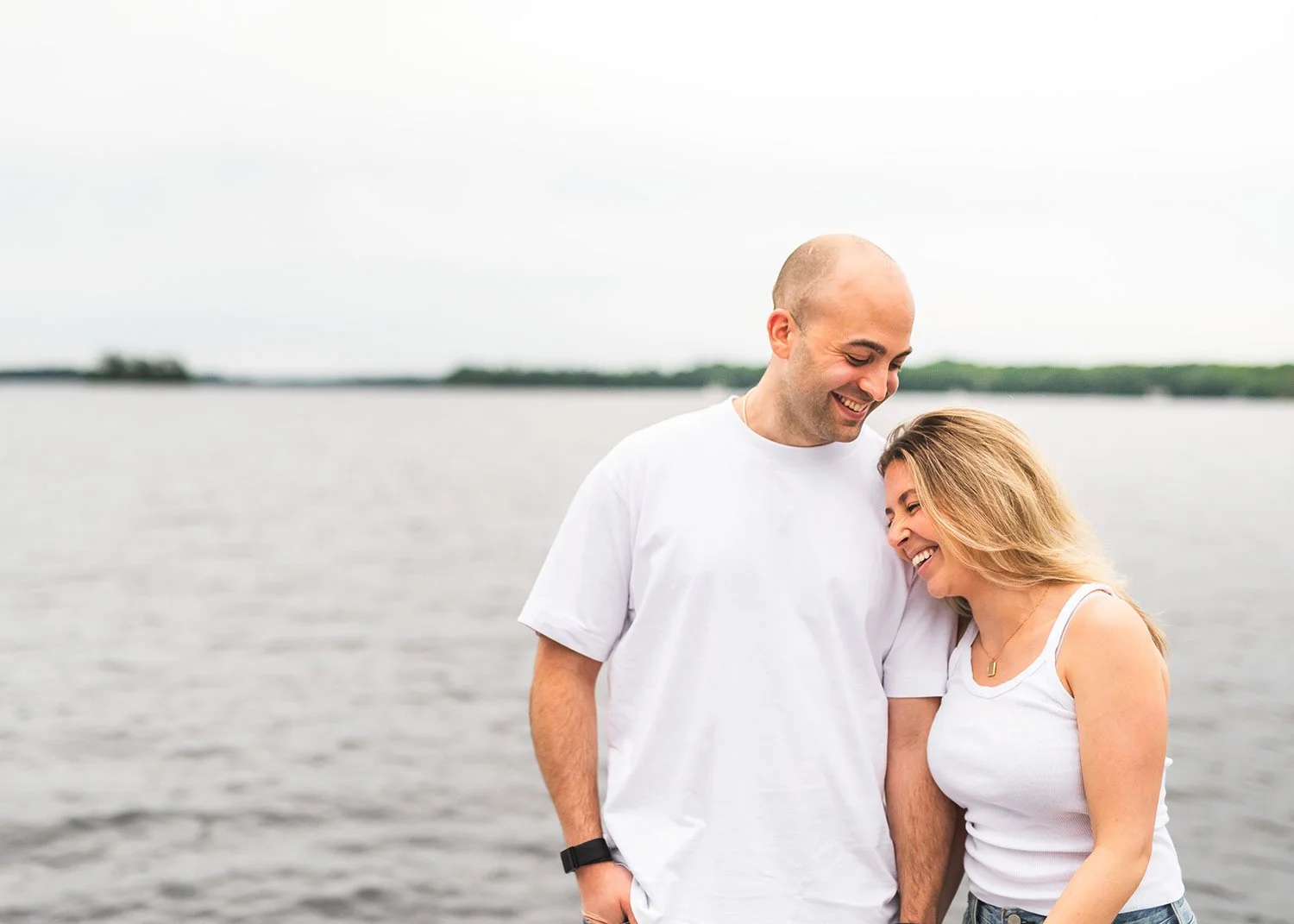
Make the actual proposal easy
When you reach the agreed spot, slow down. Take a deep breath and say what you’d like to say.
You don’t need to memorize a lengthy speech. A few genuine sentences will usually mean more than something that sounds rehearsed for an audience.
When you get down on one knee, don’t rush through it. Give your partner time to realize what’s happening and react. Once they say yes, stay in the moment. Hug, laugh, cry.
Don’t immediately turn toward the camera. Soak it all it.
Pro Tip: The best proposal photos come from real reactions, not from trying to perform the moment.
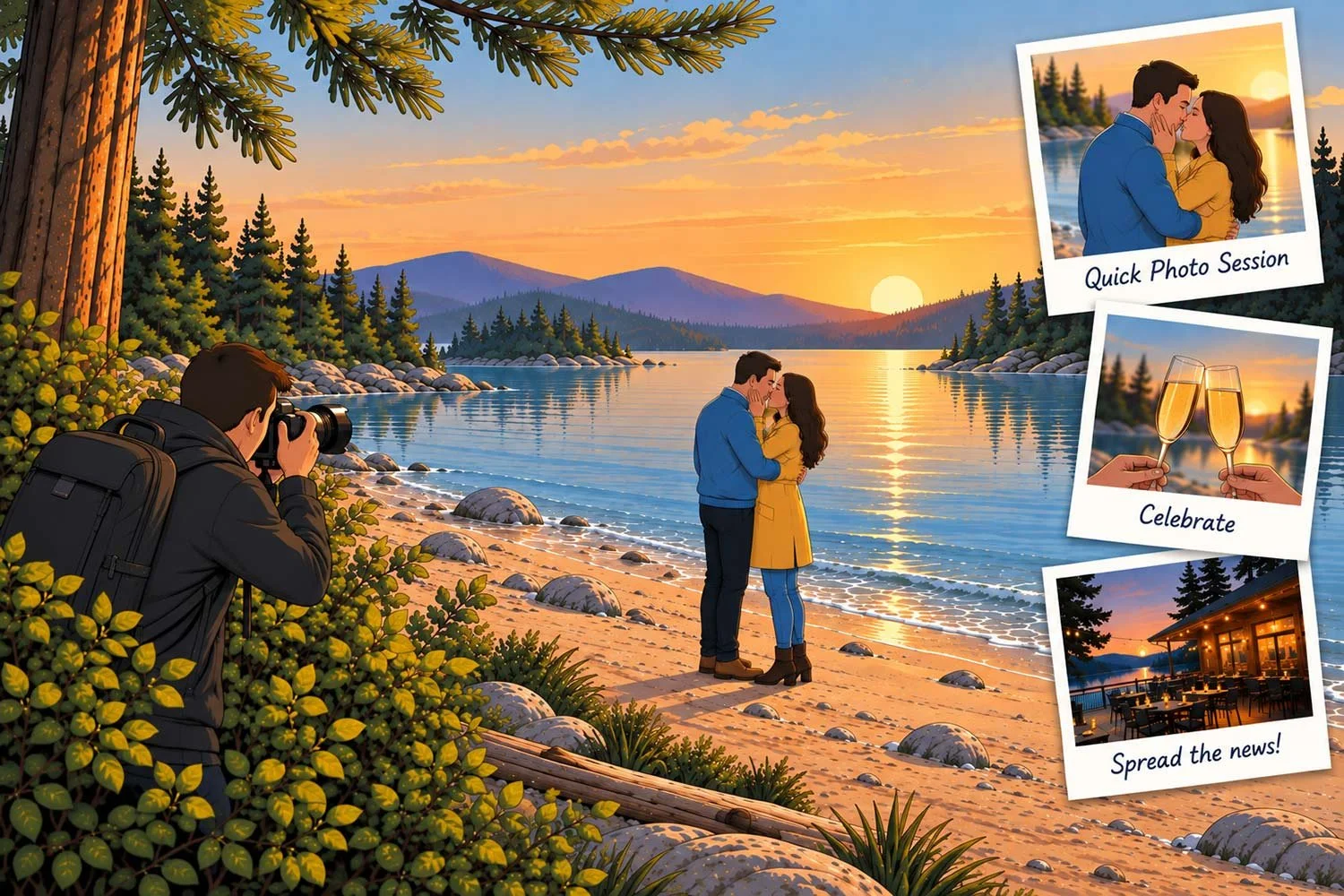
Plan what happens after the yes
The proposal itself may only last a minute, but the experience shouldn’t feel as though it ends the second the answer arrives. Think about what your partner would enjoy afterwards.
That might be:
A relaxed walk and a few photos together
Champagne waiting at the cottage
Dinner at a favourite restaurant
A private evening at your resort
Family or friends waiting nearby
Time alone before sharing the news
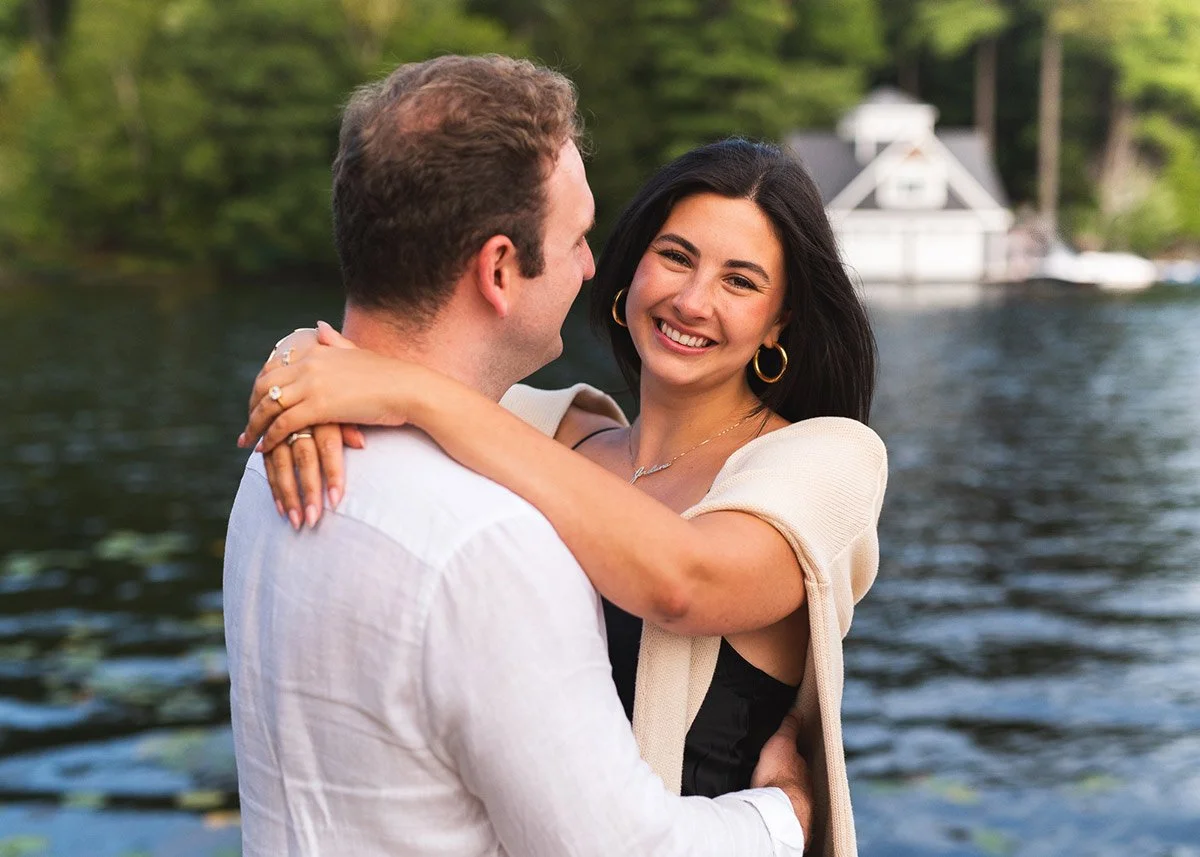
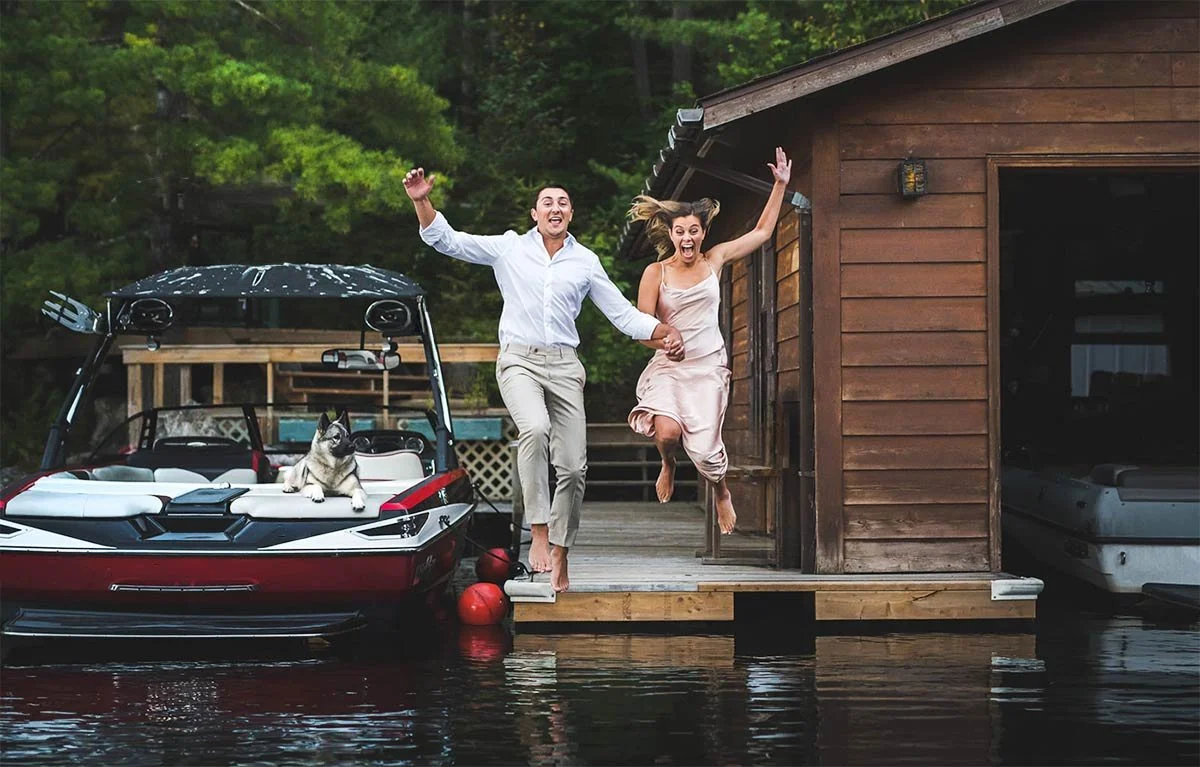
If you’ve hired a photographer, a short session afterwards gives you both a chance to breathe and enjoy being newly engaged. It doesn’t need to become a formal photo shoot. A few moments for some nice photos is all you need.
Your proposal-day checklist
In the days before, confirm:
The weather forecast
Parking and travel time
Your reservation or cover activity
The exact proposal spot
Your backup location
Your photography plan & photographer’s contact info
The message you’ll send when leaving
What you’ll both be wearing
The ring is secure and discreet
Any celebration plans are ready
On the day:
Leave extra travel time
Don’t search for the photographer
Walk to the planned spot naturally
Slow down and take a breath
Focus on your partner
Celebrate and spread the exciting news!

Common proposal-planning questions
How far in advance should I start planning?
Start once you have a general date or location in mind. A simple proposal may only require a few weeks of preparation, but popular summer weekends, resorts and cottage dates can require more notice. If you want professional photos, contact the photographer early to check their availability.
What happens if we’re late?
Don’t panic. Send a quick update to your photographer when it’s safe to do so and continue with the plan. Building flexibility into the schedule is far better than rushing your partner through the experience to hit an exact minute.
What if the location is crowded?
Planning ahead helps in this scenario, so always have a Plan B. If there’s a crowd, wait briefly or move to your backup location. This is why scouting the area and identifying an alternative beforehand can make such a difference.
How does surprise proposal photography work?
As your photographer, I’ll help confirm the timing and exact proposal location in advance. On the day, I’ll arrive at least 30 minutes early and remain out of sight or blend into the surroundings. After the proposal, we’ll have a short, relaxed engagement session before you head off to spread the great news.

The best proposal plans feel simple
Your partner doesn’t need to know how much coordination happened in the background. They should experience a thoughtful surprise that feels personal, comfortable and completely natural.
Choose a place that means something. Create a believable reason to be there. Plan the logistics carefully, then stop thinking about the plan once the moment arrives.
You’ve already done the work.
Now take a breath, look at your partner and ask the question.